
Restoration vs. Replacement: Which Saves More Money?
After a disaster, it doesn’t take long for the financial side of property damage to come into focus. Once the immediate disruption settles, the condition of your property can raise an immediate and often difficult question. Do you restore what’s there, or do you start over? The answer comes down to how deeply the extent of damage reached, and how far repairs can realistically go before replacement becomes unavoidable.
From a cost standpoint, there are many distinctions between home restoration and a full-scale remodel. And, of course, there isn’t a single path that fits every situation. But understanding what home restoration costs compare to full replacement will help you make the most informed decisions that protect both your property and your long-term investment. Let’s shed light on this dilemma.
What Restoration Means
When damage from a disaster affects your property, home restoration places a focus on bringing what’s already there back to a safe, functional condition. Instead of removing everything, everything is evaluated in terms of how much of the structure and materials can be preserved and repaired.
The initial cleanup process often includes drying, cleaning, and reinforcing all the affected areas, along with a more targeted reconstruction strategy wherever it’s needed. Water-damaged framing may be dried and stabilized. Smoke-impacted materials can be cleaned and sealed. Even structural components can sometimes be reinforced rather than replaced entirely.
The restoration approach requires a detailed understanding of how disaster-related damage can spread through your property. When the restoration is handled by professionals, it’ll allow you to preserve the integrity of your home and control the scope of work.
What Replacement Involves
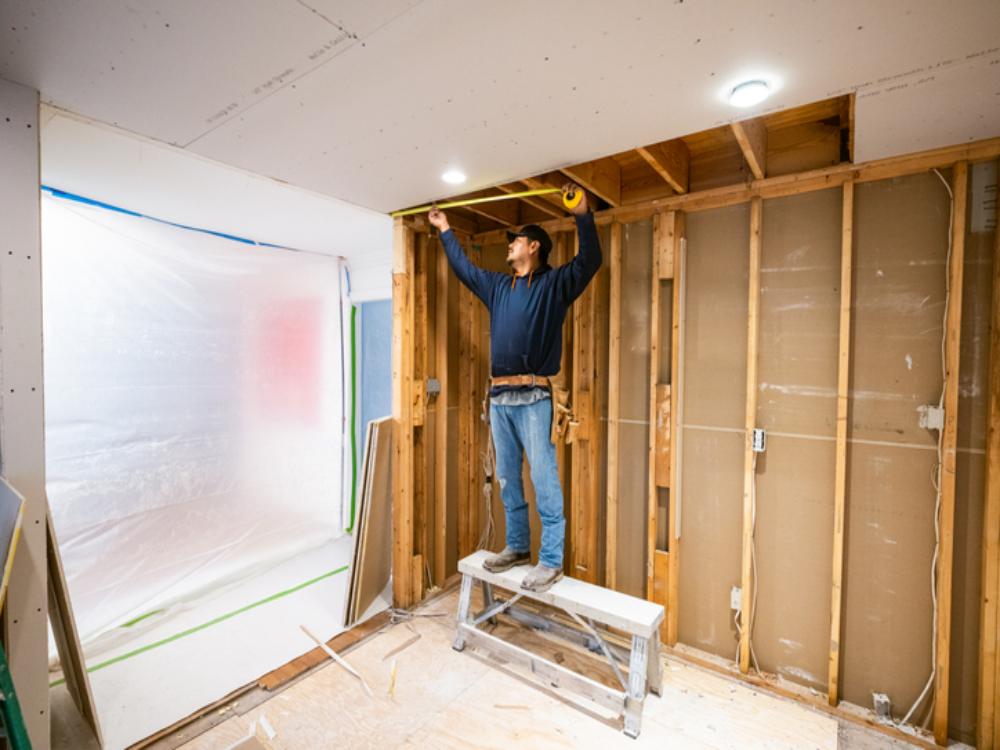
Replacement is a different approach. When the materials and systems in your home can no longer be safely restored, they are removed and rebuilt using entirely new components through home remodeling services.
Remodeling means demolishing the damaged areas, disposing of the old materials, and reconstructing everything to bring the property back to current standards. The walls, flooring, cabinetry, and even structural elements may need to be rebuilt from the ground up.
Of course, replacement creates a clean slate, but it also introduces more moving parts. The timeline for construction inevitably takes longer, and the costs can increase due to labor, materials, and the complexity of rebuilding finished spaces.
Replacement has its place, but it’s rarely the starting point. It’s ultimately the only option when restoration can’t create a stable or lasting result.
Cost Comparison Between Restoration and Replacement
The financial difference between restoration and replacement often lies in the overall scope. In many cases, the cost of home restoration will be lower because the process repairs and preserves the existing materials rather than starting over entirely. Restoration reduces the need for demolition, limits the amount of materials that are replaced, and shortens the project timeline. That combination can significantly lower labor costs and minimize the disruption to your property.
Replacement involves a much broader range of expenses. Beyond materials and labor, a remodel may include debris removal, reconstruction, and more time needed to complete the project from start to finish. Those factors tend to raise the overall investment.
That said, cost isn’t only about what you’ll spend upfront. Your decision will need to account for how well the solution holds up over time, and whether additional repairs may be needed later.
When Home Restoration Is the Best Option
There are many scenarios where restoring your property is the most practical and cost-effective path forward. If the structural integrity of your home is still intact, restoration can resolve the damage without unnecessarily expanding the scope of work. Water damage that hasn’t caused rot, smoke exposure that hasn’t deeply penetrated the surface, and any minor, localized damage from a storm can often be resolved through a professional restoration plan. But restoration works best when the damage is contained, and the systems your home relies on are still stable. In those cases, restoring what’s left after a disaster will help you recondition your home’s durability and control the costs in the process.
strikes a great balance between controlling costs and reconditioning your home’s durability.
When Replacement Is Necessary
There are also situations where home renovation is the only safe and sustainable option. When there’s severe, extensive structural damage or if load-bearing components have been compromised, restoring everything may not be enough to reinstate your home’s stability. The same applies when materials have deteriorated beyond repair due to prolonged water exposure, fire damage, or extensive mold growth.
Your electrical system, insulation, and critical structural connections must meet specific standards. So, if these features have been damaged and put your home’s safety in question, rebuilding is likely the most suitable option. Renovations may require a larger upfront investment, but the process will ensure everything in your home is safe and functioning well for you and your family.
Contact Kelmann Restoration for a Professional Assessment
If you’re weighing the decision between home restoration and replacement, our experts here at Kelmann Restoration will provide a comprehensive assessment to help you determine the most cost-effective solution. Whether some areas need restoration or your home requires a full remodel, we’ll evaluate what your property actually needs.
When your home has been impacted by a disaster, now is the time to get a clear answer. Fast-track your home’s recovery and reach out to our team to request an assessment.